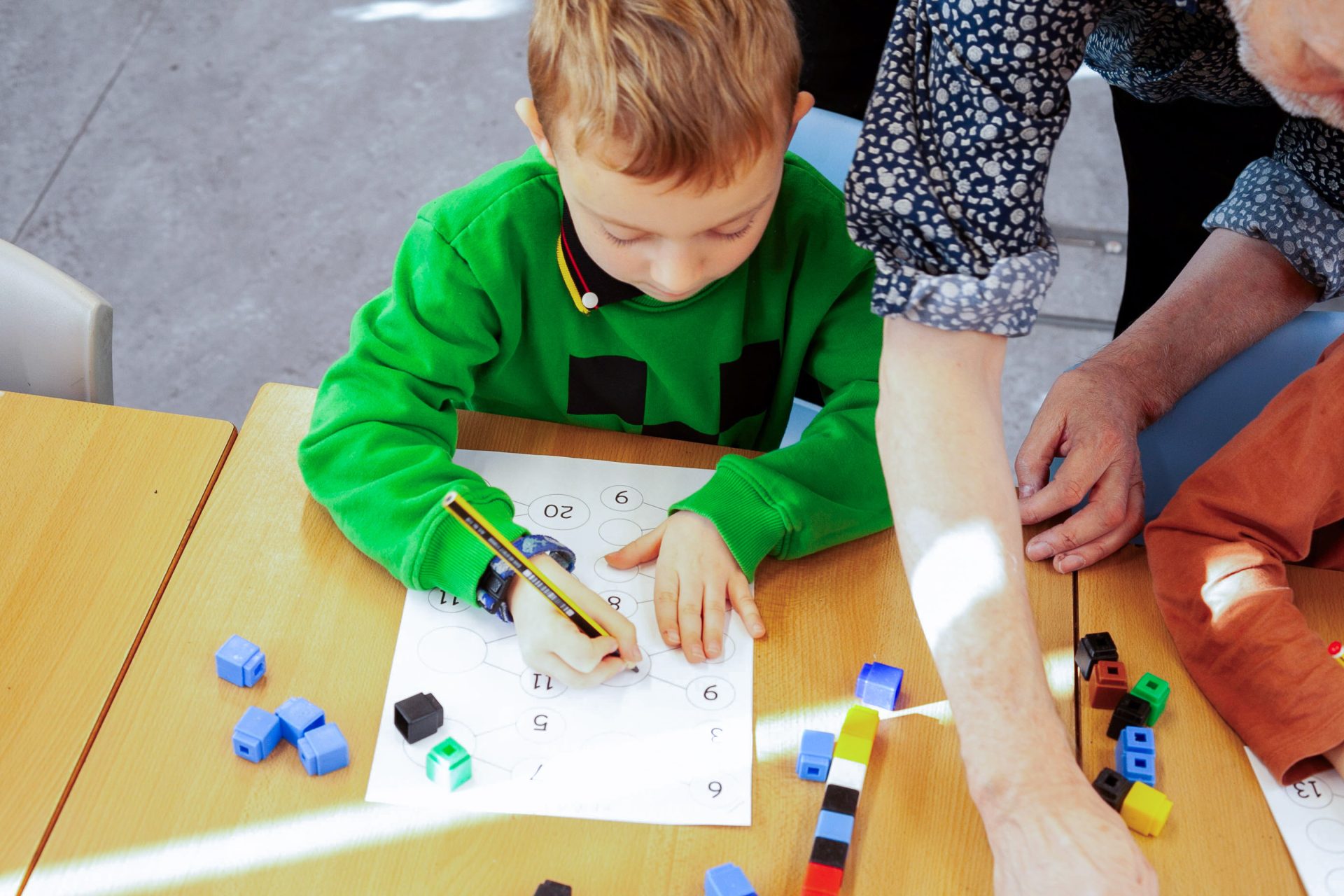
What makes a progressive primary school different from a traditional one? For many families, the answer lies not in results alone, but in the daily experience of childhood. Progressive education offers an approach that values curiosity, creativity and emotional wellbeing alongside academic development, and it is prompting more parents to reconsider what primary school can be.
Across the country, families are looking beyond league tables and formal assessments, asking not only what their children will achieve, but how they will grow during these formative years. In that reflection, progressive education feels less like a trend and more like a thoughtful response to modern childhood.
So what makes a progressive primary school? At its heart, it is not a particular scheme of work or a set of techniques. It is an outlook, one that sees children as active participants in their own learning and recognises that education reaches far beyond academic achievement.
At Dallington, this outlook has shaped the school’s approach since its founding in 1978, guiding both the structure of the classrooms and the culture of the community.
What Is Progressive Education?
Progressive education is grounded in the idea that children learn best when they are engaged, curious and emotionally secure. Rather than treating knowledge as something delivered from the front of the classroom, a progressive approach is more of a dynamic exchange and is shaped by questions, dialogue, exploration and reflection.
Different schools express this philosophy in different ways. Some draw inspiration from Montessori, Steiner or Reggio Emilia traditions. Others develop their own frameworks while holding firmly to similar principles. What unites them is a shared commitment to nurturing the whole child and not just seeing them as a data point or future exam result, but as a developing individual.
At Dallington, this philosophy can be seen in the way children are encouraged to ask questions freely, to contribute to discussions and to see themselves as capable thinkers from an early age. Learning is not something that happens to them. It is something they are invited into.
A Child-Centred Approach to Learning
At the core of progressive education is a respect for developmental readiness and individual pace. Children do not all grow in straight lines, nor do they flourish under identical conditions. A child-centred environment acknowledges this natural variation and responds with attentiveness rather than uniformity.
At Dallington, our teachers observe closely and plan responsively. Conversations, projects and themes often emerge from genuine interests within the classroom, allowing children to engage more deeply with ideas that feel meaningful to them.
This approach does not lower expectations. Rather, it deepens them. When children feel secure and genuinely interested, they are more willing to persist, to grapple with complexity and to take intellectual risks. Learning becomes purposeful, not performative.
Holistic Education: Nurturing the Whole Child
A progressive primary school recognises that academic growth cannot be separated from emotional and social development. The classroom is not only a place where knowledge is acquired; it is a community in which children are learning how to relate to others, manage feelings and understand themselves.
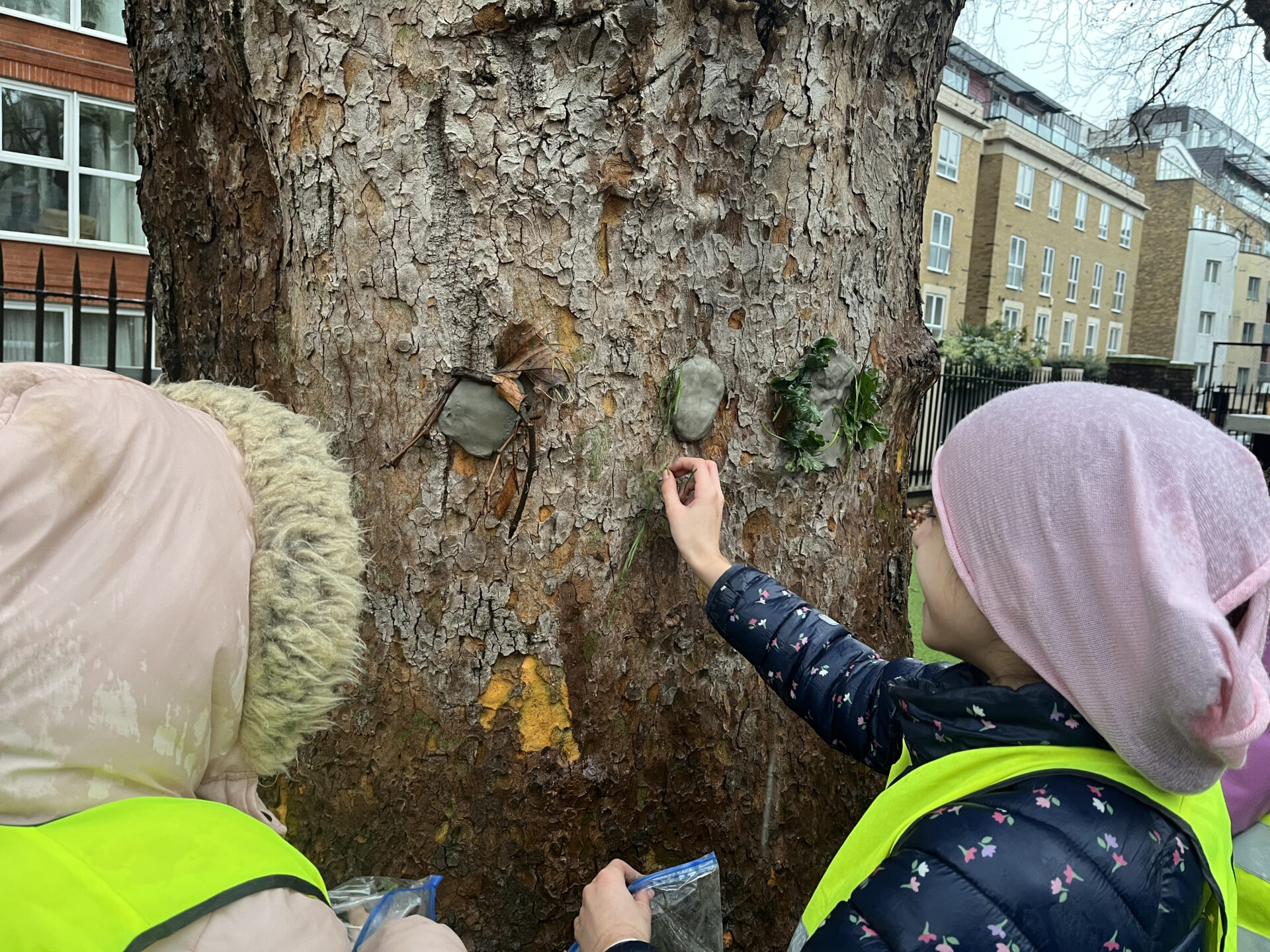
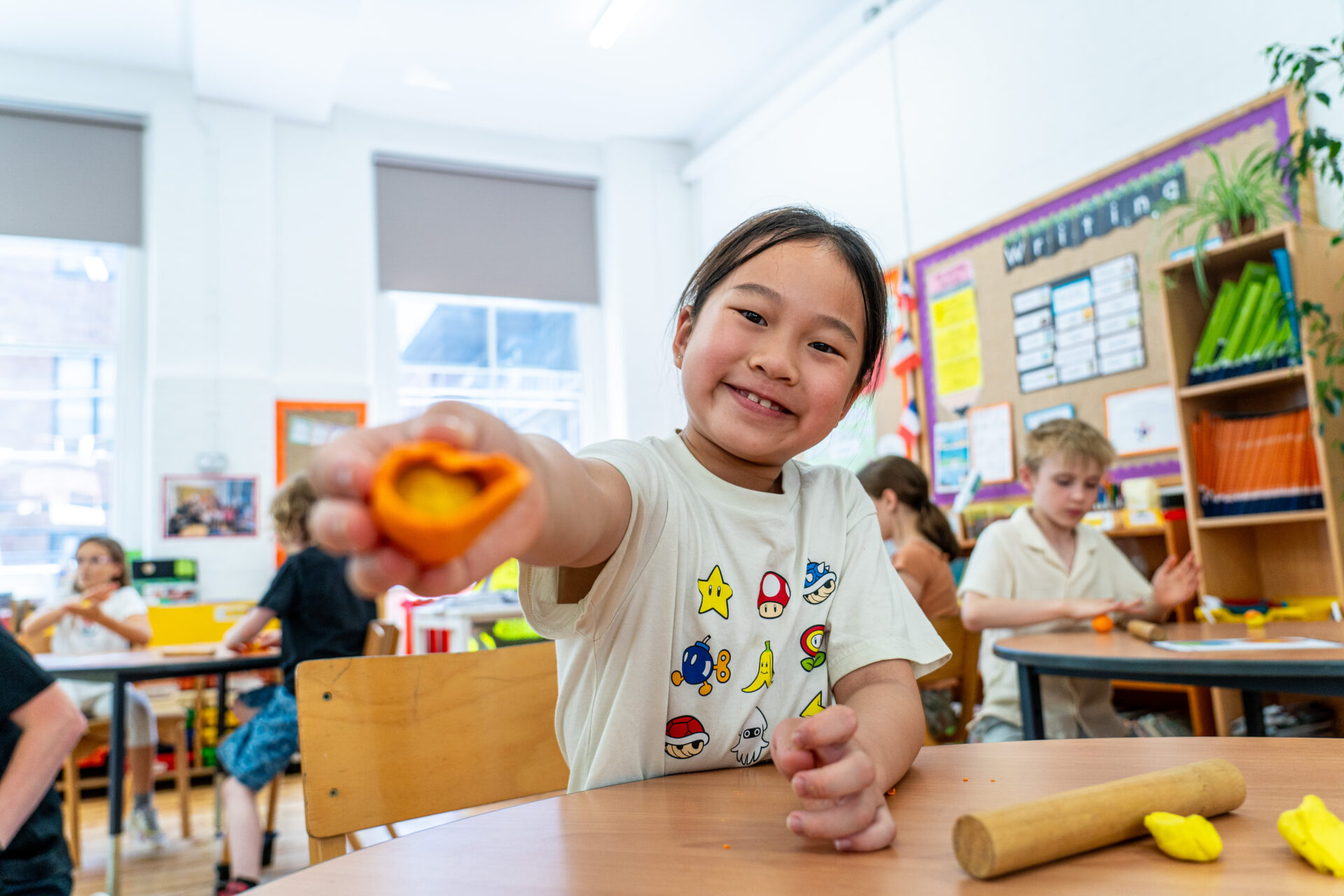
At Dallington, creativity is woven through daily life rather than positioned as an optional extra. Drama, storytelling, art and discussion sit naturally alongside literacy and mathematics. The arts are not treated as enrichment; they are understood as powerful tools for thinking, expression and understanding.
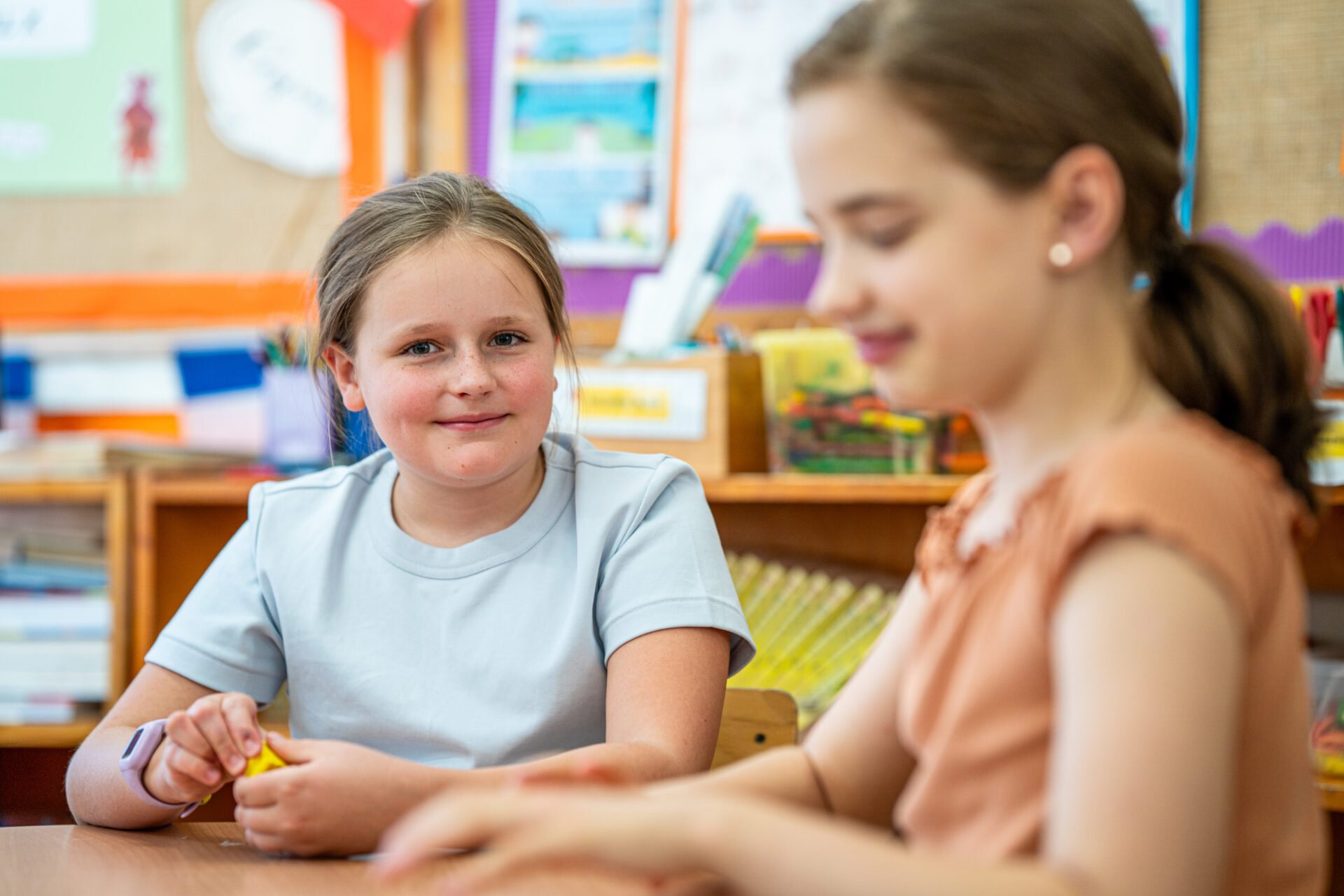
Conversations about fairness, responsibility and friendship are equally valued. When children feel safe, known and heard, their capacity to learn expands. Emotional literacy supports resilience. Confidence supports curiosity. A sense of belonging supports engagement.
Holistic education is not softer education. It is deeper education that recognises that children thrive when every aspect of their development is respected.
Mixed-Age Classrooms in Progressive Primary Schools
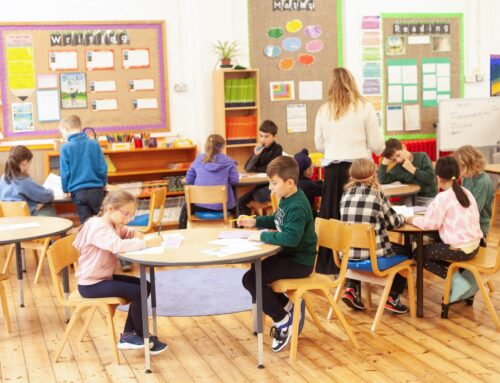
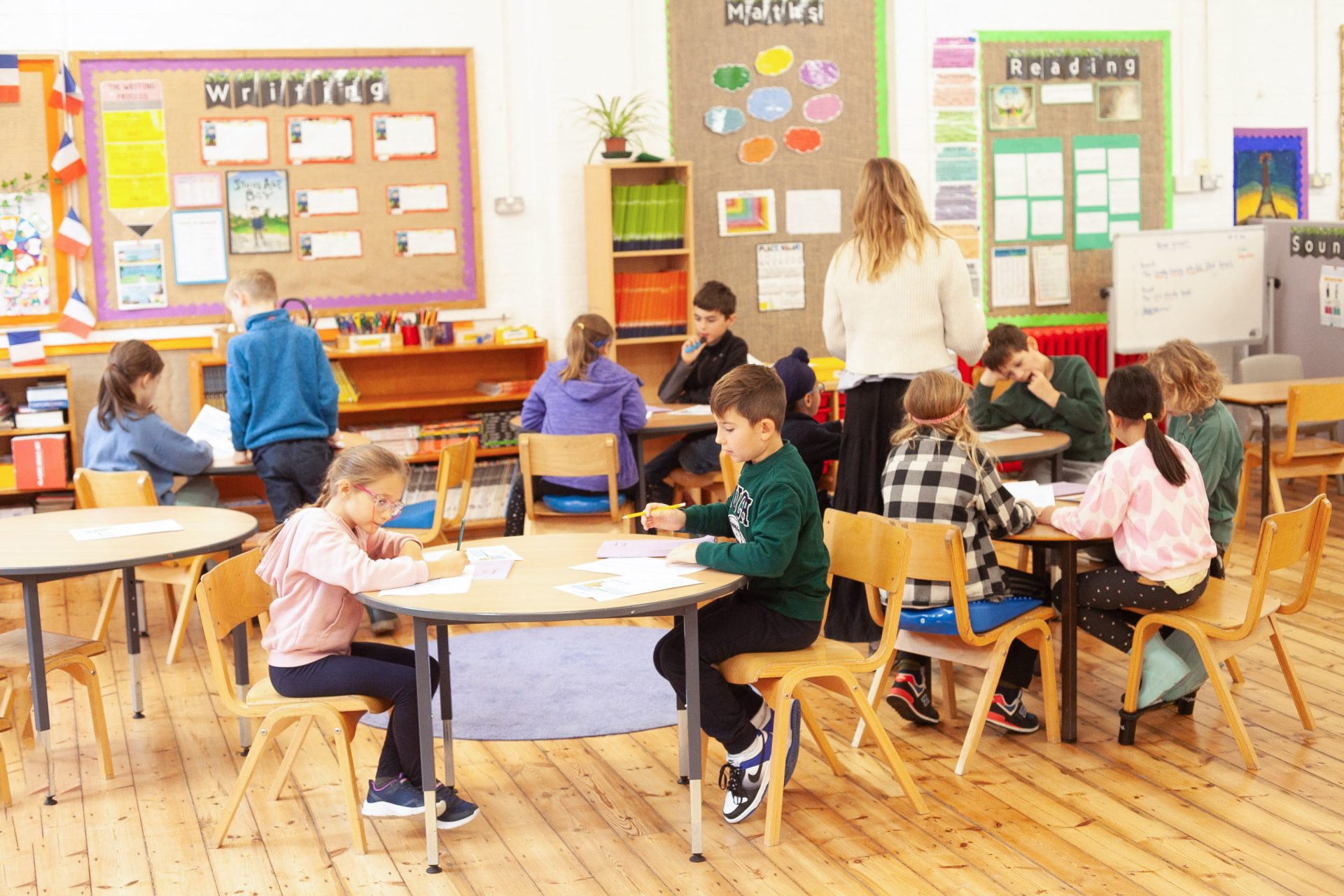
One of Dallington’s most distinctive features, and a defining characteristic of many progressive schools, is its mixed-age classrooms.
Rather than separating children strictly by year group, learning communities are formed across ages. Within this environment, growth happens in quiet but powerful ways. An older child explaining a mathematical concept to a younger peer reinforces their own understanding while developing leadership and empathy. A younger child observing older work absorbs language, ideas and confidence simply by being part of the space.
The emphasis shifts away from comparison and towards contribution. Children are recognised not only for where they sit within a curriculum, but for how they participate in the life of the classroom.
Mixed-age learning reflects the adult world more honestly. Rarely do we work only alongside those at precisely the same stage as ourselves. By learning in community across ages, children develop adaptability, patience and collaboration, all of which are qualities that extend well beyond primary school.
Assessment and Motivation in a Progressive Primary School
Progressive primary schools approach assessment with thoughtfulness and care. Progress is monitored closely, but the emphasis lies on understanding development rather than ranking performance.
At Dallington, this means valuing dialogue, reflection and observation alongside formal outcomes. Children are encouraged to see mistakes as part of learning, not as evidence of failure. Intrinsic motivation, and the desire to understand for its own sake, is a crucial part of our ethos.
When children feel safe to experiment, to revise and to try again, they begin to associate challenge with growth rather than anxiety. Academic achievement is supported not through pressure, but through confidence and engagement.
Why Progressive Education Matters in the Modern World
The world children are growing into is complex and rapidly evolving. Knowledge remains important, but the ability to adapt, to think critically, to collaborate and to approach new situations with creativity has become equally essential.
Families increasingly recognise that learning flourishes where there is security and trust. A hurried or overly pressured environment can narrow curiosity rather than expand it.
Dallington’s approach reflects this understanding. By valuing individuality, community and creativity, the school seeks to prepare children not only for the next stage of education, but for thoughtful participation in the wider world.
Progressive education is not a retreat from ambition. It is an expansive view of it.
Preparing Children for Life Beyond Primary School
Ultimately, what makes a progressive primary school is a commitment to seeing education as formative rather than transactional.
It is the belief that childhood deserves protection as well as preparation.
It is the trust that curiosity is a powerful engine for growth.
It is the understanding that community, creativity and compassion are not extras, but essentials.
For nearly five decades, Dallington has lived this philosophy, through its mixed-age classrooms, its creative curriculum and its belief that children thrive when they are known and valued as individuals.
Progressive education does not simply prepare children for the next assessment or transition. It prepares them for life thoughtfully, confidently and with a lifelong love of learning at its heart.
If you’d like to see progressive education in action, then why not come and visit us? We hold frequent open days and discovery sessions and would love to welcome your family to ours.