


At Dallington, literacy is not treated as a set of isolated skills, but as something that grows through curiosity, conversation and creativity. From the earliest years, children are immersed in stories, language and opportunities to express themselves, building confidence alongside capability.
We believe that learning to read and write should feel meaningful. When children are engaged in what they are saying, hearing and exploring, literacy becomes something they return to independently, rather than something they feel they have to get right. While structured teaching plays an important role, it is always grounded in real experiences that help children develop a deeper understanding of language.

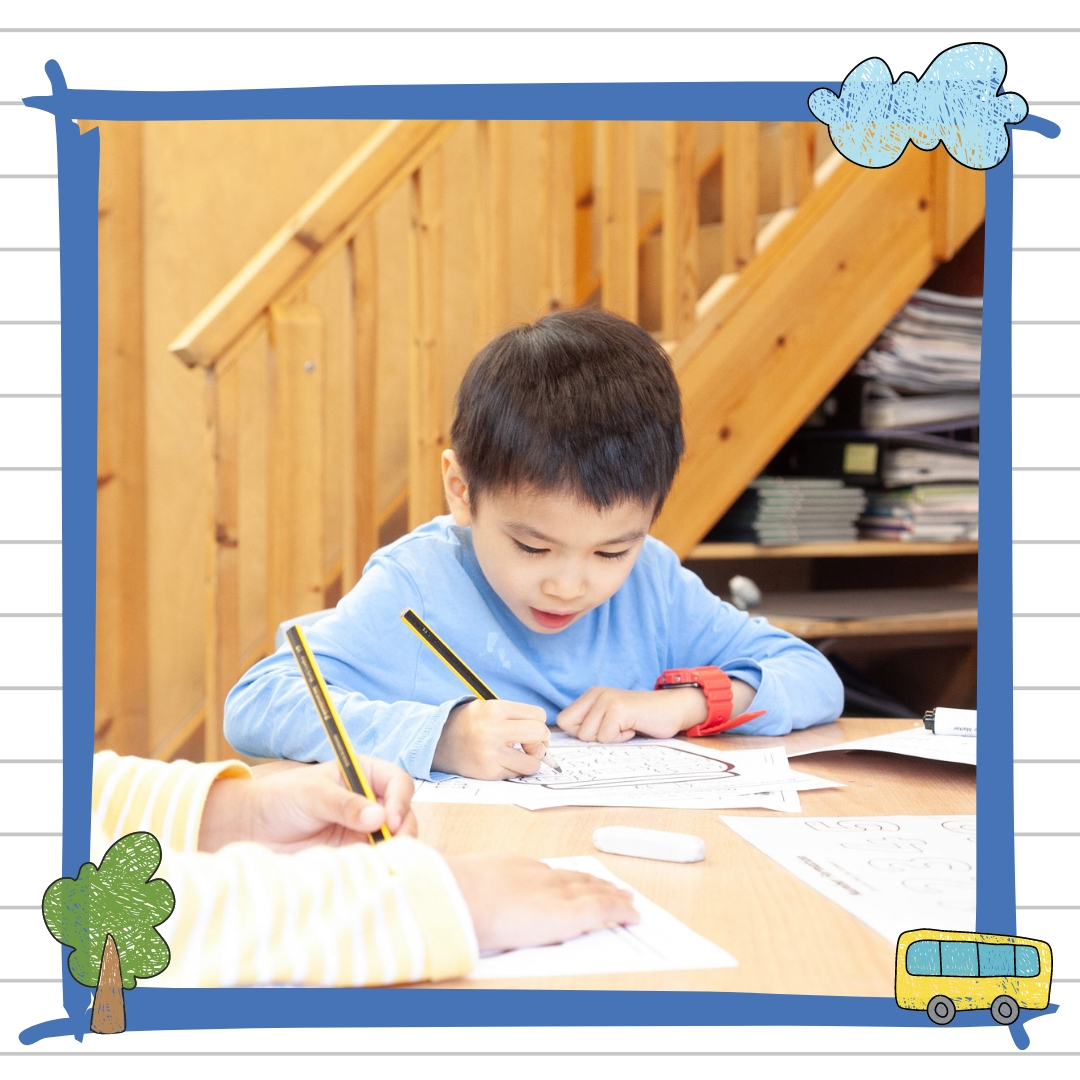
How literacy develops at Dallington
Literacy at Dallington is woven through daily life. Children encounter reading and writing in ways that feel purposeful, whether that’s sharing stories together, discussing ideas, or creating their own work.
In our mixed-age classrooms, children learn alongside and from one another. Younger pupils are exposed to more advanced language and storytelling, while older children reinforce their own understanding by reading with and supporting others. Their shared experience helps every child to build both confidence and fluency in a natural, collaborative way.
Rather than progressing through a fixed pathway at the same pace, children at Dallington are supported to develop when they are ready. This allows them to build secure foundations, which in turn leads to greater independence and enjoyment over time.
Reading
A love of reading sits at the heart of literacy. At Dallington, our classrooms are filled with books, and children are encouraged to explore a wide range of stories, authors and topics from an early age.
Regular story time remains important throughout the school, not just in the early years. Trips to Finsbury Library and access to classroom libraries help our children see reading as something that exists beyond the classroom and as part of everyday life.
As children grow, they begin to read more independently, developing both fluency and comprehension. Because reading is introduced in a way that feels engaging rather than pressured, children are more likely to develop lasting reading habits and a genuine enjoyment of books that stretches beyond the classroom and into later life.

Writing
Writing at Dallington develops as a form of expression as well as a skill. Children are encouraged to experiment with language, share ideas and write for different purposes.
In the early stages, this may take the form of mark-making, storytelling and simple sentence building. As confidence grows, children begin to explore different styles, including stories, poetry and factual writing. Over time, they develop a stronger understanding of structure, grammar and punctuation, alongside the ability to adapt their writing for different audiences.
Because writing is rooted in real experiences and personal ideas, children are more willing to take risks and develop their own voice. This leads to greater confidence, which supports more sustained progress as technical accuracy develops.
Phonics and early reading skills
Phonics plays an important role in early literacy at Dallington. Children are introduced to sounds, patterns and word recognition through a multi-sensory approach that supports different learning styles.
Rather than being taught in isolation, phonics is embedded within a wider language-rich environment. Children learn to connect sounds with meaning, using them as part of their developing reading and writing.
Our approach ensures that children gain the foundations they need, while also maintaining a sense of enjoyment and purpose. By avoiding an overly rigid or pressurised approach, we find children are more likely to develop both confidence and long-term fluency.
We support every child’s journey
Children develop literacy skills at different rates, and we recognise that confidence is just as important as technical ability. Our teachers work closely with each child, providing support and challenge where needed.
We place particular importance on creating an environment where children feel comfortable taking risks with language, knowing that mistakes are part of the learning process. This encourages experimentation, resilience and a more positive relationship with reading and writing.
Whether a child is just beginning to recognise sounds or is already an enthusiastic reader, the aim is the same: to help them feel capable, engaged and motivated to keep developing.
See literacy in action at Dallington
Literacy at Dallington is best understood through experience. The interaction between children, the role of mixed-age learning and the emphasis on creativity all come together in ways that are difficult to capture fully on a page.
The best way to understand how this works in practice is to see it in action. Why not visit us and see how our unique approach helps children to thrive and become the best version of themselves?
Frequently Asked Questions
How do you teach phonics at Dallington?
Phonics is taught as part of a broader literacy approach. Children learn sounds and word patterns through multi-sensory activities, while also being immersed in stories and language-rich experiences.
Will my child learn to read at the same pace as other schools?
Children develop at different rates, and we support each child individually. The focus is on building both confidence and capability, ensuring strong foundations for long-term progress.
What support is available if a child finds reading difficult?
Our teachers provide targeted support where needed, working closely with each child to help them build confidence and develop key skills at a pace that suits them. We also maintain constant and open communication with parents and believe that working together as a team keeps our children’s best interests at heart and helps them get the most out of their time at school.
How do you challenge confident readers?
Children who are already confident readers are encouraged to explore a wider range of texts, develop deeper comprehension and experiment with their own writing across different styles.